

Let’s be honest for a second—is Upwork still worth it?
If that question isn’t living rent-free in your head right now, chances are it has visited at some point. And trust me, you’re definitely not alone on this one.
I was casually scrolling through Reddit, and I stumbled on a thread titled “Is Upwork really not worth it anymore?” The person who posted it sounded unsure, and the comment section didn’t exactly offer comfort. If anything, it felt like a digital cold shower.
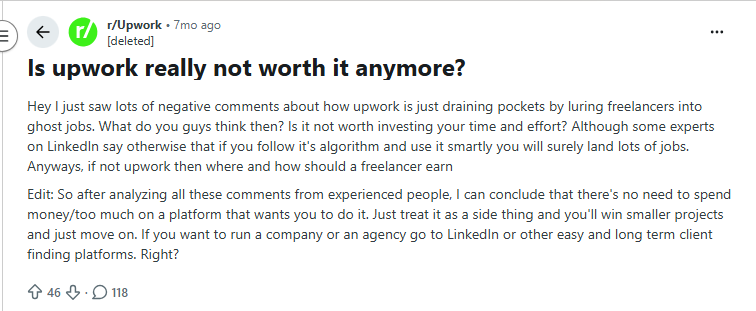
Some of the comments read:
‘I’m pretty convinced that Upwork has become a scam site. The sheer number of ghost jobs tells me there’s some suspicious stuff going on.’
‘It depends on your niche and how much time and money you wanna sink into it. not for me though, lmao.’
‘Not as much as before, the market has become too saturated, so it will probably get more from you if you don’t work multiple jobs.’
‘The quality is at all time lowest run. The market is atrocious. People want to get a “professional video editor” for 5$ a video. I saw a post somewhere, where it was a Middle East client offering work for 1.20$ for a video, and surprisingly, there were a lot of people interested.’
At this point, I started questioning everything. It was like my motivation quietly packing its bags.
But then—just when things are starting to look bleak—I come across a few voices of reason:
‘The issues you’re saying aren’t solely on Upwork, the truth is the freelance market is very oversaturated. There are not enough clients for everyone to earn good money. If you have good skills, good with people, you can make money. But the law of averages, you will likely struggle, given the current state. And it’s no different on other platforms’
‘Upwork ain’t dead, just super competitive now. If you niche down + stack reviews it still works, but yeah tons of spam/ghost jobs.’
Now that hits differently, doesn’t it? Suddenly, it’s not just about blaming the platform—it’s about understanding the bigger picture.
And just when I was about to make up your mind, a few more comments pulled me back from the edge:
‘It really depends. If you have decent people skills and marketable skills, then it can be a valuable lead source. I’ve built up my profile over several years and have no problem landing profitable long-term gigs. I have lots of room to increase my rate, too.’
‘Nah, it works out. I thought it was, but quite honestly, I changed my offer, and it worked out for me. Landed two big contracts recently and have been getting a lot of views on my proposals. So no complaints from me atm.’
So, what do you think?
Here’s the truth: yes, Upwork is getting more competitive. No sugarcoating that. But at the same time, people are still winning—big time. The real question isn’t “Does it still work?”
Rather, it’s “What are they doing differently that I am not?”
Now, sure—luck, timing, and all those unpredictable life factors play their part. But this is 2026. Business has evolved everywhere, and freelancing is no exception. What worked a few years ago might barely get you noticed today. The game has changed, and if you want results, you’ve got to adapt.
The good news? You’re not walking into this blind. There are clear, practical shifts you can make to improve your chances—and we’re about to get into them.
But first, let’s quickly level-set.
If you’ve never dipped your toes into this freelancing pool, Upwork is a global marketplace where freelancers and clients meet. Whether you’re a writer, designer, developer, marketer, or translator—if it can be done remotely, there’s probably a job for it. In this article, I will teach you how to become a successful Upwork freelancer.
Now, yes, Upwork does take a cut—typically around 10% to 15% of your earnings (painful, right?). But in exchange, they handle a lot of the messy stuff: contracts, payment protection, weekly payouts, dispute resolution, deadlines, and even time tracking if you want to go full productivity mode.
So while it’s not perfect, it’s far from useless. The real issue lies in how you use it—and that’s exactly what we’re about to unpack.
Getting started on Upwork
If you’re new to Upwork, it can feel a little confusing at first—like walking into a busy market where everyone already seems to know what they’re doing. The good news is that it gets much easier once you find your rhythm.
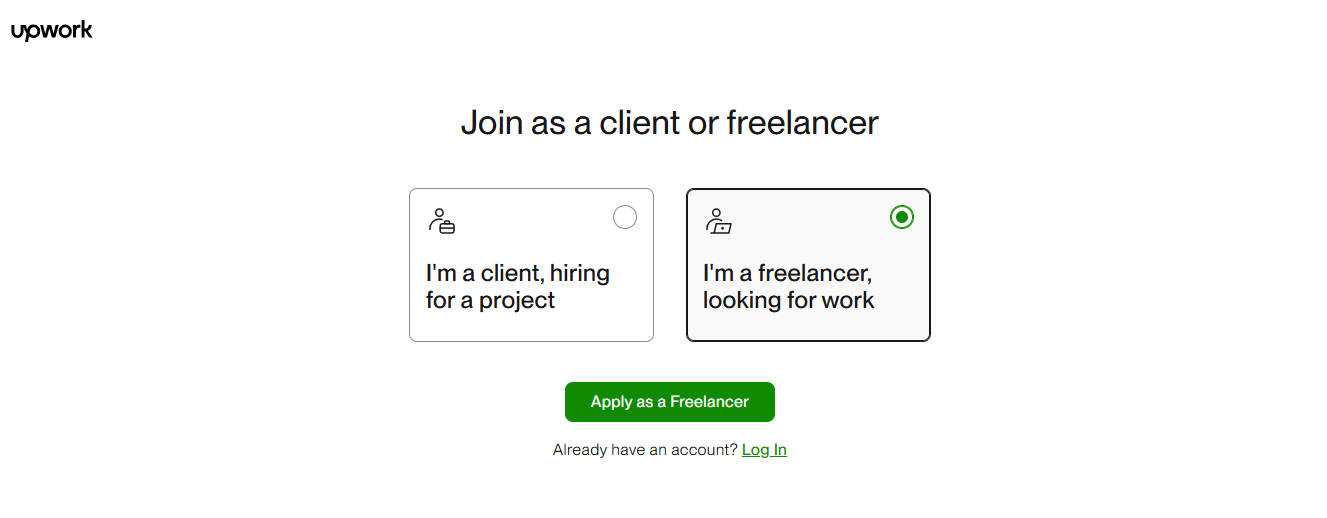
The first step is to set up your account and create your profile. Ensure you keep it real. Use your actual details and upload a clear, professional photo.
Now, this is where things start to get interesting. Your profile isn’t just a form to fill—it’s your personal sales page. Take a moment to shape it so it actually speaks for you.
Start with a clean, simple headline that shows exactly what you do. Then write a short overview that explains how you can help—not just what you can do, but why a client should care. Add your skills, include a few solid work samples, and don’t skip your work history and education. Once everything is filled out, your profile stops looking like a draft and starts looking like someone worth hiring.
With your profile ready, it’s time to go job hunting. Head over to the “Find Work” section and explore what’s out there. Use filters to avoid drowning in irrelevant listings. That saves you from scrolling endlessly.
Set a rate that matches your current level (be honest with yourself here), and when you apply, don’t send generic copy-paste proposals. Clients can smell those from a mile away. Instead, write each proposal like you’re talking directly to them—clear, simple, and focused on what they need.
On this platform, we have many guides to help you understand how everything about Upwork works. They’re actually worth checking out, especially when you’re just starting.
Now, a quick one: this guide isn’t just about getting started. It’s really for you if you’ve already dipped your toes in. maybe you’ve applied to a few jobs, maybe you’ve even landed a couple—and you’re thinking, “Okay… how do I do this better?”
That’s exactly where we’re headed.
What Do You Need to Fix?
If you’re struggling on Upwork, the most important question to ask yourself is not whether the platform is broken or if clients are the problem, but rather, “What do I need to fix?”
The truth is, succeeding on Upwork requires understanding how the system works and learning how to use it effectively.
Upwork isn’t a confusing or unpredictable space. Rather, it’s a large marketplace filled with clients who are already looking to hire. These aren’t cold leads you have to convince from scratch; they come with clear needs and a willingness to pay. In many ways, they’re already saying, “I have a problem and a budget—who can solve it?”
Your role, then, is simple but crucial: position yourself as the person they can trust to deliver results.
Build a Profile Clients Can Actually Read
And this is where many freelancers start to lose potential clients without even realizing it—right at the profile level. Instead of positioning themselves as the clear solution, they treat their profile like a CV or LinkedIn page, filled with long paragraphs, big words, and every skill they’ve ever learned. But Upwork doesn’t reward that approach. Clients—and the algorithm—care more about clarity, personality, and specificity.
When someone searches for a “PowerPoint Presentation Specialist,” they don’t want your life story. They want a quick, clear answer to one question. Can you create great presentations or not? Your profile should make that obvious at a glance, without forcing them to dig.
If you offer multiple services, you can still position yourself for them. Still, things usually become easier when you niche down or use specialized profiles focused on a single clear direction.
Your Profile = Your First Impression (Make It Count)
Let’s break this down into what really matters:
1. Your Profile Picture
Keep it simple. Look at the camera, use a clean background, and present yourself as someone a client can trust with their money. Avoid filters, AI-generated portraits, or overly creative angles. A clear, professional headshot should say one thing: “Yes, I know what I’m doing.”
2. Your Headline
Avoid being generic.
Instead of:
- “Web Developer”
Go for:
- “PHP | WordPress | React Native Developer with UI/UX Expertise ”
Instead of:
- “Copywriter”
Try:
- “Conversion Copywriter | Email & Direct Response Specialist”
This shift takes you from invisible to searchable. Think like a client—what keywords would they type when looking for someone like you?
Stand Out
When a client scrolls through proposals, they’re asking one question:
“Who feels like the safest and smartest choice?”
Your job is to answer that—clearly.
Show what makes you different:
- Your work style
- Your approach
- Your past results
- Your certifications
- Your portfolio
And if you don’t have many reviews yet? Borrow credibility.
Upwork actually allows you to include testimonials from outside the platform. Whether you place them in the testimonial section or weave them into your profile, they help build trust fast.
Also, don’t waste your opening lines. The first few sentences of your profile are like Google search results—they determine whether someone clicks… or scrolls past you like yesterday’s news.
Write Proposals Faster (Without Sounding Like a Robot)
Speed matters on Upwork. The earlier you apply, the better your chances.
But that doesn’t mean you should send the same copy-paste message everywhere. That’s a fast track to being ignored.
Instead, create a simple, reusable template, then tweak it slightly for each job. Think of it as “efficient personalization.”
Use a solid structure like this:
- Greeting
- Request for consideration (mention the job title)
- Why you?
- What they can expect working with you
- Call to action
It’s quick to send, easy to customize, and far more effective than starting from scratch every time.
Start Small
Starting small is often the smartest move, even if it doesn’t feel ideal at first. The reality is that when you’re new, clients don’t trust you yet, and your usual off-platform rates may scare them off. Because of this, it makes sense to lower your prices temporarily.
You can then take on a few smaller gigs, even ones that may not seem exciting. That will help you build reviews, show proof of your work, and gain momentum.
This isn’t a long-term plan, but a strategy to get established. While doing this, protect your reviews at all costs because early ratings can shape your entire profile. Stay professional with every client, deliver quality work, and aim for consistent 5-star feedback.
Once you’ve built enough credibility, you’ll find that better-paying clients start coming to you naturally.
Understand the Level System
Understanding the level system on Upwork is key to long-term success. As your earnings grow—$100+, $1K+, $10K+—you unlock more opportunities and visibility on the platform. Many clients filter freelancers based on these milestones, and in most cases, the best-paying jobs are reserved for those who have crossed the $10K+ mark.
This is why those early small jobs matter more than they seem. They’re not just quick wins—they’re stepping stones that help you build credibility, unlock better opportunities, and position yourself for higher-paying clients over time.
Be Smart with “Cheap” Jobs
While it makes sense to begin small and focus on building reviews, that doesn’t mean you should accept every cheap job that comes your way. Not every low-paying opportunity is worth your time, especially if it comes with unnecessary risk or unclear expectations. Even in the early stages, being selective about who you work with will save you a lot of trouble.
One major thing to watch out for is whether the client has verified their payment method. If they haven’t, that’s a clear red flag. Though not always a dealbreaker, but definitely a sign to proceed with caution. As a simple rule, never start work until payment is verified. It protects your time, your effort, and ensures you’re not working for free.
Use Milestones to Protect Yourself
For fixed-price projects, milestones act as your safety net. Instead of naming them as completed tasks like “Deliver mockups,” frame them as starting points such as “Begin mockup phase.” This small shift encourages clients to fund the milestone before you begin work, not after. It may seem minor, but it can save you from doing unpaid work.
Bring Your Own Clients
If things feel slow, it’s time to get creative. You can invite your existing clients to work with you through Upwork. While there are fees involved, the benefits are worth it—you build your work history, gain reviews, and strengthen your profile.
Just make sure that once they’re on the platform, all communication and payments stay there, as Upwork takes this very seriously.
And Finally… Don’t Count on Anything
This one might sting, but it will save you a lot of stress. On Upwork, promises don’t always turn into contracts, contracts don’t always lead to long-term work, and completed jobs don’t always result in reviews. Clients can change their minds, projects can disappear, and feedback may never come.
For your own peace of mind, don’t rely on a job until it’s under contract, don’t count on income until it’s secured, and don’t expect reviews until they’re posted. Stay flexible, stay realistic, and always keep your pipeline active.
What Changed on Upwork?
Let’s take a moment to look at how Upwork has evolved over time. If you’ve been on the platform for a while, you’ve probably noticed that things feel different. And if you’re just getting started, you’re actually in a great position—you don’t have to unlearn outdated strategies.
The truth is, Upwork updates its rules, policies, and overall structure pretty often. And if you’re not keeping up, you might be playing a 2022 strategy in a 2026 game—which, as you can imagine, doesn’t end well.
The Algorithm Got Smarter
Upwork’s algorithm has come a long way from what it used to be. In the past, it sometimes felt like you could “figure out” the system and get by with a few tricks.
Today, Upwork is far more advanced and uses machine learning to predict client–freelancer compatibility. It also detects spammy proposals to maintain quality across the platform. On top of that, it ranks profiles based on performance, engagement, and client satisfaction.
What this means is simple—you can’t game the system anymore, but you can align with it. When your profile is clear, your proposals are relevant, and your clients are satisfied, the algorithm naturally starts working in your favor. And in the long run, that’s a much more reliable way to grow.
AI Isn’t Optional Anymore
One of the biggest shifts on Upwork is the rise of AI. What used to be a bonus skill is now becoming essential across many fields. Demand for AI-related work—from video editing and image generation to automation and chatbots—has grown rapidly.
As a result, freelancers who understand how to use these tools are becoming more valuable in the marketplace. This often leads to higher earnings and better opportunities for those who can apply AI effectively.
Upwork itself is also embracing this change with AI-powered tools that help freelancers work faster and match with clients more effectively. You don’t need to become an expert overnight, but you do need to start thinking about how AI can improve your workflow and make you more competitive in your niche.
Visibility Now Comes at a Cost
Another important shift is that visibility on Upwork is no longer entirely free. Though there are still some free opportunities, you WILL need to invest in features like Connects, Freelancer Plus, and paid boosts to increase your chances of getting noticed. As a result, applying to every job you see is no longer a smart strategy.
Instead, you need to be selective and intentional. Treat Connects like fuel—use them wisely on opportunities that truly fit your skills and have a higher chance of converting. A focused approach will always outperform a scattered one.
Bigger Clients, Bigger Opportunities
Upwork is also evolving beyond a simple freelancer marketplace. With its growing focus on enterprise clients and larger projects, the platform is evolving quickly. As a result, it is creating more opportunities for freelancers to take on bigger roles. This shift is opening the door to more long-term, higher-value work.
At the same time, small and medium-sized businesses are still actively hiring. This means freelancers continue to have access to a steady flow of opportunities. As a result, there’s room for both high-ticket contracts and smaller, flexible gigs.
The key is positioning. Whether you want to work with large companies or smaller clients, your profile and offers should clearly reflect the type of work you’re aiming to attract.
The Platform Is Financially Strong (Which Is Good News for You)
Another factor worth paying attention to is platform stability. Upwork continues to show strong financial performance, with growing revenue and reliable operations. For freelancers, this translates into consistent payments, a stable marketplace, and the confidence to build long-term plans around the platform.
In short, you’re not building your freelance career on shaky ground—you’re working within a system that is growing and evolving.
So, What’s the Bottom Line?
Upwork in 2026 isn’t worse—it’s simply more advanced, more competitive, and more selective. To succeed, you need to adapt to AI-driven workflows, be strategic with how you apply for jobs, position yourself clearly, and focus on delivering real value.
The freelancers who are thriving today aren’t just the most talented—they’re the ones who understand how the platform has changed and adjust accordingly.
That’s exactly why this course was created.
Created by a Top-Rated Plus freelancer on Upwork, this course is highly practical and straight to the point. It cuts out unnecessary fluff and focuses on real, unfiltered strategies that actually work. Its goal is to help you not just get by, but truly survive and thrive on the platform—no matter how competitive it becomes.
Because at the end of the day, success on Upwork isn’t reserved for a lucky few—it’s for those who understand the game and learn how to play it better.
So instead of asking, “Is Upwork still worth it?” a better question to ask yourself is:
“Am I evolving with it?”